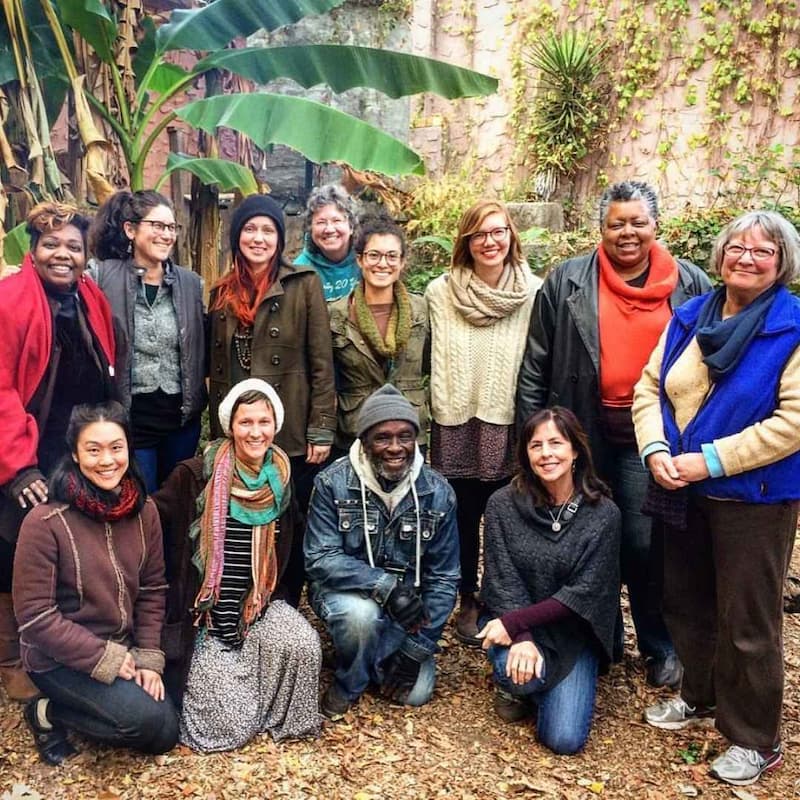
Lorna is an herbalist, foot care worker, medicine maker, and teacher dedicated to community empowerment through herbalism. She completed an herbal residency with Michael Moore at the Southwest School of Botanical Medicine; attended clinical programs at both the Blue Ridge School for Herbal Studies and BotanoLogos; and studied as a foot health practitioner at the SMAE Institute in Maidenhead, England. Through Herbalista, she specializes in building affordable models of care based on mobile medicine and community participation. Lorna believes that in order to preserve our access to herbs as medicine we have to use them, plant them, eat them, preserve them, dream them, and share them!
Today has brought a gentle rain to the parched hills. It has been a real scorcher in Ireland this summer, as we are under a drought warning and the typically green hills have faded to a crispy yellow.
The rain comes to us like the most precious gift, a soft and steady sprinkling, slowly working its way into the land, quenching her thirst and our own. But around the world, extreme heat is still ravaging communities and landscapes. Our hearts also feel the flames, anxiously responding to the relentless aggression of war and greed.
The study of herbalism has taught me that everything has a season. And that every season brings characteristics or qualities that paradoxically challenge us, while also offering us the potential for wondrous gifts.
Summer opens our hearts. And while this can create feelings of desperate vulnerability and anxiety, it also allows for deep love and radical caring.
The practice of community herbalism and community care is a choice we can make every day. Doing the herbwork, inspired by deep love for our neighbors and the land, offers real protection against the burning inferno of ____________ (your choice fill in the blank: militarized techno-feudalism; hyper-capitalism; corporate imperialism; ecocidal oligarchy, etc.).
The rains today are slow and steady, as is the path we can walk together. When we garden alongside one another, when we create remedies together to share across the kitchen table or in the streets, we are building a community beyond commodity.
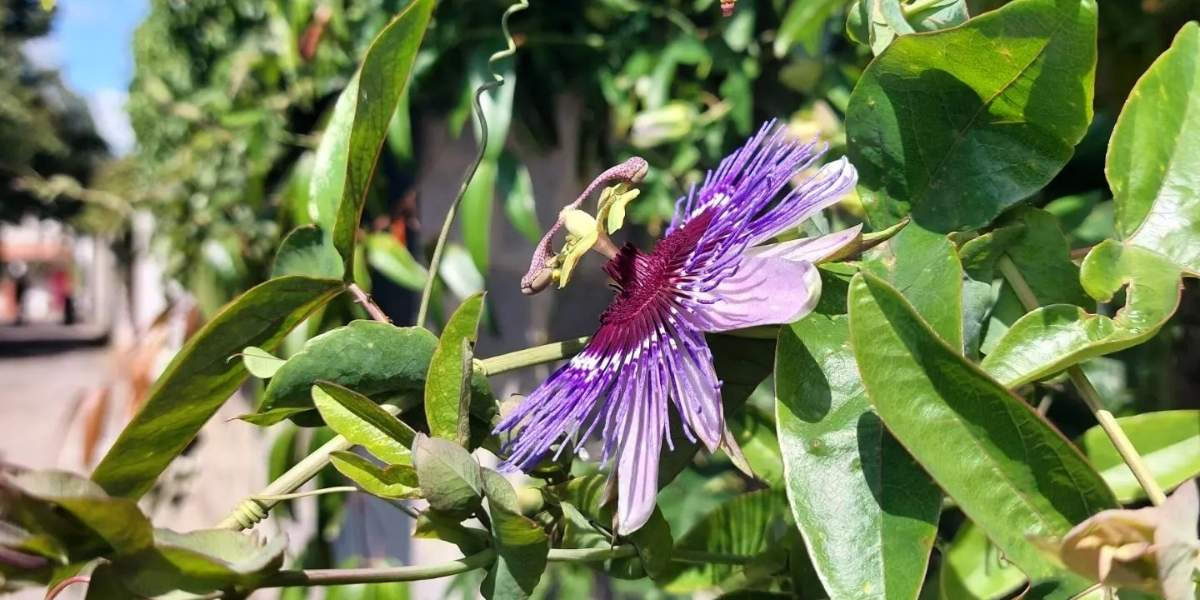
Thank you rain. Thank you passionflower and rose. Thank you seaweed and blue vervain.
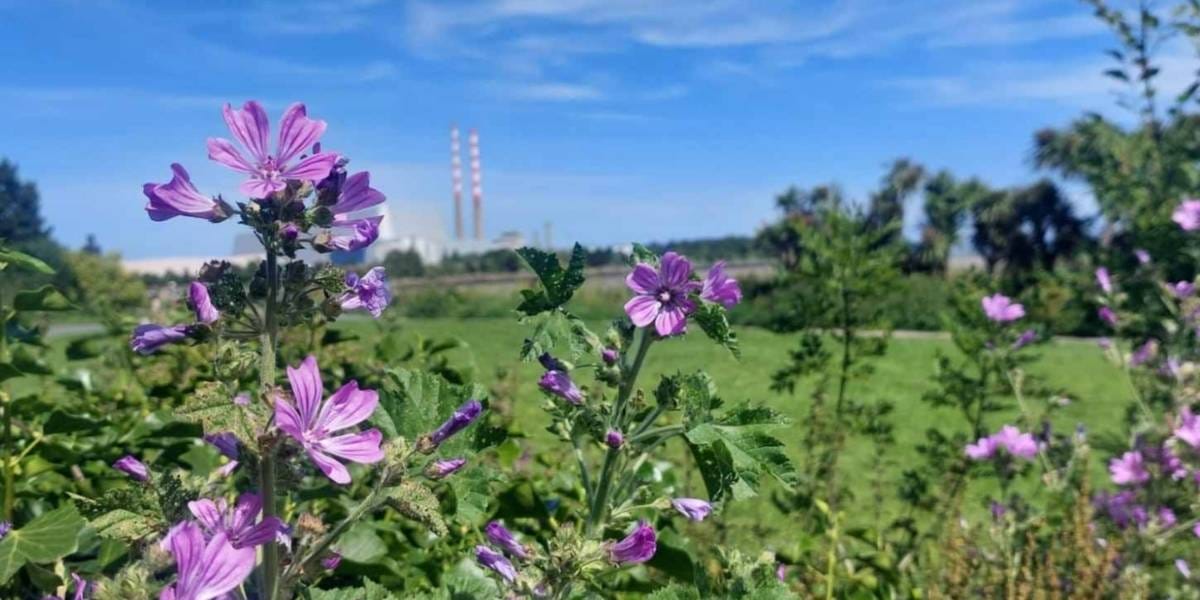
The sun is high, the blossoms are heady, and I hope you all are getting plenty of time to sit with the plants and walk through the woods. The most healing medicine happens when we take the time to watch a squirrel scamper through the branches of a linden tree or to notice a lovely swath of mallow growing along a sandy path.
I’ve spent the past few weeks doing a lot of plant rambling and flower gazing and am thrilled to once again be heading off to the wild west of Ireland on the Wild Routes Tour. This will be my 10th tour with what is a lovely crew of herbalists, foragers, craftsmen, storytellers, and stewards of this sacred (and vulnerable) land. I’ve gathered my herbal first aid kits, field guides and walking stick and look forward to the start of our next adventure.
And now a request to our Herbalista members ––
When we first built the online Toolkit, the dream was simple: to share the recipes, forms, and project protocols that worked for us with all the other folks out there, trying to do community herbwork. Whether you’re running a mobile clinic or brewing kitchen medicine for your neighbors, this Toolkit belongs to all of us.
And just like a garden, it needs a little tending to thrive!
We want to make sure these tools are serving you just as you need. If you have about 5 minutes to spare, we would be so grateful if you could share your feedback with us. Which resources are your absolute go-tos? What’s missing from the kit? How can we make things easier?
Please help us support all y’all herbalistas working the streets, the fields, the kitchens and the apothecaries by completing this short survey.
Thank you so much for your feedback, your generosity, and for being such a vital part of this growing community. It takes a village. ????
For folks looking to formalize their work at the Free School, we are excited to announce that a new, optional Certification Track for our online Herbal Foundations Course has officially begun!
This is an optional track that we hope helps people realize a sound start to their journey as community herbalists. We have worked hard to craft a meaningful track that both solidifies your foundational knowledge ANDencourages hands-on engagement with the plants and your community through the Herbwork Portfolio. Here are all the details.
Certificate Track Basic Requirements
Pass the Cumulative Foundations Quiz
Submit a Portfolio of Herbwork
Cumulative Quiz
???? Think of this as a check-in with yourself to see what you’ve comprehended and to celebrate how far you’ve come.
Paced for your journey:Opens 60 days after you enroll to ensure you have ample, stress-free time to dive into the course material first.
Once unlocked, this open-book quiz is available whenever you finish working through the lessons. No expiration, no rush.
Scoring: a minimum of 70%
Herbwork Portfolio
???? True community herbalism is grounded in real-life practice. Your portfolio is a curated collection of the Herbwork you have engaged in throughout the course.
Portfolio Submission Portal is open from July 15th through September 15th.
Develop and share your unique perspective as a community herbalist. We are grading on engagement and reflection, not perfection.
Scoring: Complete/Incomplete
You can find all the details in your course. Just click the link below or visit Module 1: Welcome to Herbalista > Course Certification. (You must be registered and logged into your course to access the course certification page.)
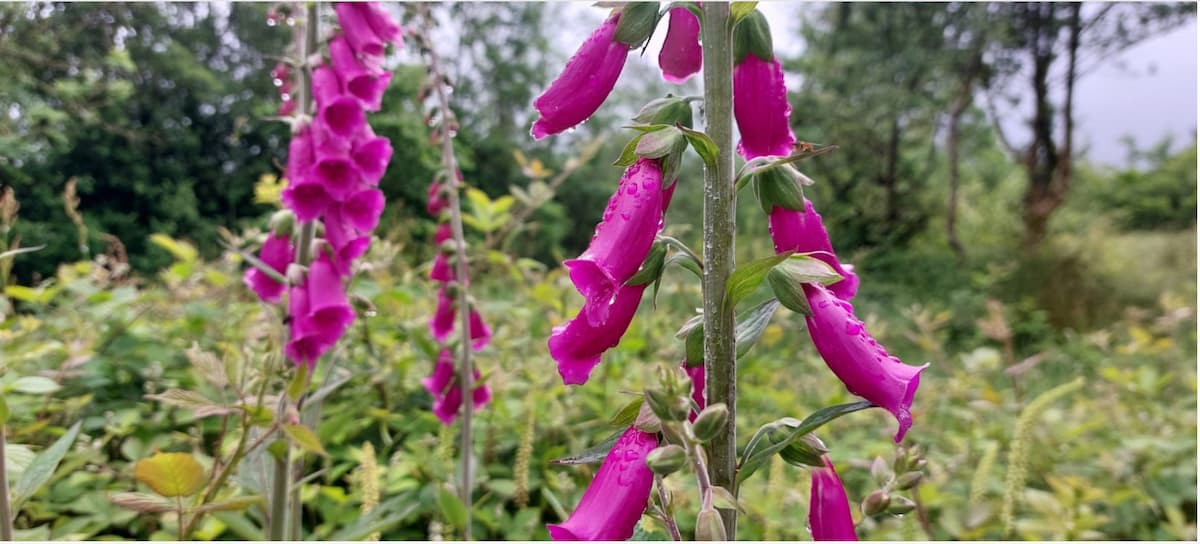
There’s just something about Foxgloves. They demand our attention, transforming a disturbed patch of roadside or a simple rock wall with striking, pink floral spikes. And how I treasure the sweet moment when you notice a fuzzy little bee trying to squeeze into their delicate tubular flowers.
Here, in its native Ireland, Foxglove is a widespread and abundant plant. And like any immigrant, as I settle into my life in Ireland, I am trying to make connections and build relationships.
And as an immigrant herbalist, this means meeting the plants and learning their stories from the folks who have lived amongst them.
Foxglove is famous both as a great medicinal AND a great poison, and so it often features prominently in the old herbals and tales passed down through the generations.
Early mentions of Foxglove (aka Sticatos) in medievel Irish medical texts (such as Tadhg Ó Cuinn’s 1415 herbal) describe it as a diuretic to help with abdominal swellings. Those understandings evolve over the centuries and come the 1800’s, we can then read Dublin-based Dr. Stokes’ detailed case studies about the use of Foxglove (aka Digitalis) in cases of dropsy (congestive heart failure) to slow yet strengthen a weak and failing heart, aiding the body to expell accumulated fluids.
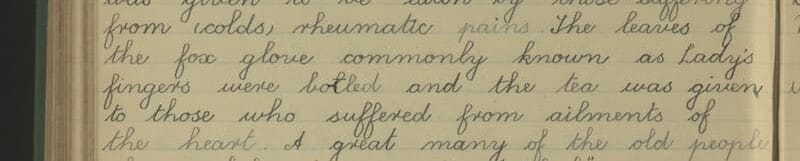
Browsing the National Folklore Collection (Dúchas.ie) for Foxglove (aka Lus Mór) we can discover many tales of cures and curiosities in their Schools’ Collection (Bailiúchán na Scol) that was gathered in the late 1930’s. Written in the sweetest and most careful cursive lettering, these stories helped to preserve generational knowledge, that having survived hundreds and even thousands of years, were suddenly vanishing as candlelight storytelling gave way to electrified mass-media culture.
In these writings, we meet Foxglove the heart medicine…
Foxglove the poison…
and Foxglove the fabulous fairy fashion accessory…
Quite a complex character, the Foxglove. But aren’t we all.
We hope to see you round at some of our happenings this month, including the launch of our Certificate Track for the Herbal Foundations Course. You can find all the deets below.
May is for MAGIC. And MULBERRIES and MIMOSA blossoms…and well, so many of my favorite things. And now I’m adding MAUGHANACLEA to that list. The photo below was taken looking out over the Maughanaclea hills of West Cork.
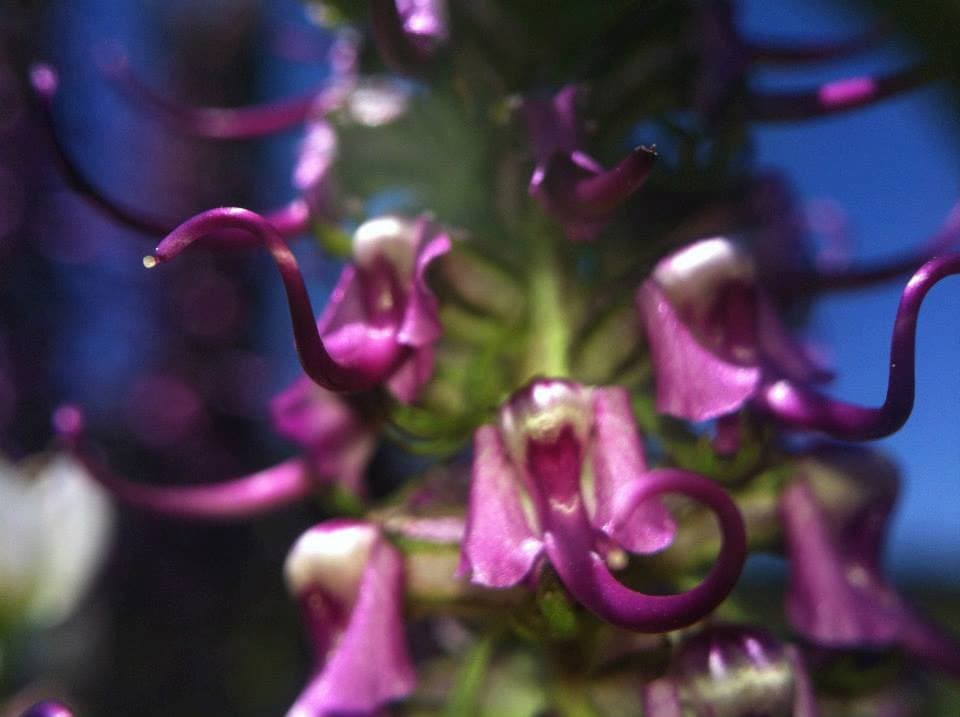
And as we enter the summer season on this Bealtaine weekend, with its long stretch of the day, I feel a kindling in my heart for the warmer days ahead. On my walks, I am discovering all the lovely plants growing here, including a sweet patch of Pedicularis sylvatica pictured below. Also known as Dwarf Red Rattle or Lousewort, this low growing plant is found across Ireland and particularly likes wet, grassy and boggy ground.
For folks who have followed Herbalista for a time, you will know that the Pedicularis genus holds a special place in my heart. In fact, it features on our very first logo, as the Herb Bus takes flight on the leaves of Pedicularis canadensis, the native Pedicularis of the Southern Appalachian mountains.Pedicularis is what’s known as a hemi-parasite, whereby it derives some of its nutrition by feeding off the other plants it grows alongside. And while this means you need to be very aware of the plants it is growing with and never harvest it when growing alongside plants that could be poisonous to humans, it also means that you can appreciate that little extra bit of magic it has when growing amongst the wild roses (as I have done when harvesting from just such a patch in Colorado).
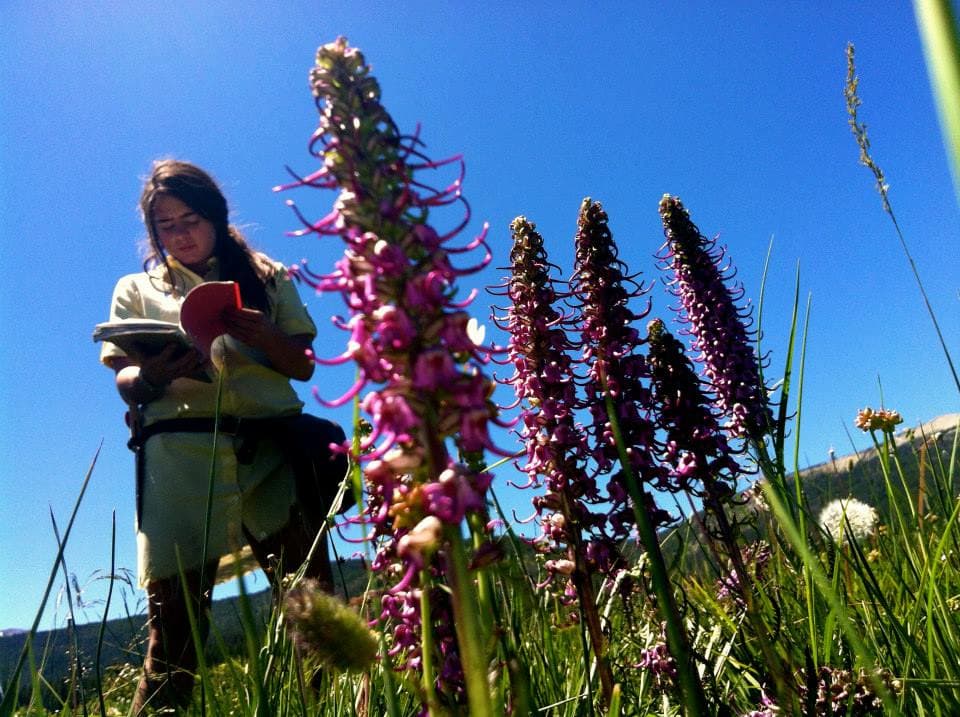
Pedicularis also reminds me that we too are fed by those around us and so must try and surround ourselves as often as we can with beautiful and giving community.There are many species of Pedicularis growing across the United States, including the particularly mesmerizing P. groenlandica (aka Elephant’s Head) pictured below. This patch we came across in Montana. It’s easy to se how it got the name Elephant’s Head.
In the States, Pedicularis is a mainstay as a relaxant nervine, and finds its way into many a blend. We rely on it a lot at our First Aid Stations, either alone, or blended with other pain relieving and relaxing herbs such as Skullcap, Passionflower or Valerian.
We would always chuckle that it was a member of “nervine row” as our tincture kits are arranged by botanical name and you would often find Pedicularis sat next to a few other wonderfully relaxing nervines –Passiflora, Piper, and Piscidia.
I’m looking forward to getting to know Dwarf Red Rattle a bit better now, as one of the two Pedicularis species growing here in Ireland. Culpepper spoke of it being used to “heal fistulas and hollow ulcers and to stay the flux of humours in them as also the abundance of the courses or any other flux of blood, being boiled in port wine and drunk”. In other words, it was used to heal wounds and as a styptic.
Nibbling on the leaves just now, it has a taste that reminds me of home.
We have a lot of lovely happenings this month – in Atlanta, Ireland, and online. Hope you can join the gatherings or that you have a lovely herbal community to enjoy these days with wherever you are.
Remember when we actually believed that the digital revolution was going to benefit the environment and save the planet? No more cutting down trees for all that paper! No more burning all that fossil fuel to deliver all that mail!
It turned out quite differently. Instead of benefitting the environment, the digital industrial complex is now the biggest threat to it.
Here in Ireland, while we were trying to move towards renewable energy and away from fossil fuel, our electricity grid has been hijacked by data centres whose electricity usage has quadrupled in the past 10 years. They are now sucking close to a quarter of our electricity which is more than all residential households combined.
We are at 141 data centres and counting. And with the AI boom, this is only going to get worse. Much worse.
Ireland will never be able to keep up with this demand, much less using renewables. The tech companies know it, the ecologists know it, the government knows it, and the people know it.
Cue rising energy costs for you and me (all the while data centres get subsidized electricity).
Cue desperation and fuel protests (and the protesters being ignored for days on end and even vilified for daring to voice their grievances)
Cue the government refusing to address the real issues because at this point they are completely dependent on the tech industry. (The stats are mindboggling – 40% of Ireland’s entire corporation tax take was paid by two tech companies alone)
Cue the people coming together to defend this incredible island.
Cue the Friends of the Earth Ireland suing Ireland’s Energy Regulator for allowing the continued expansion of these data centres at no matter the environmental cost. https://www.friendsoftheearth.ie/…/friends-of-the…/
Cue the Stop the spin on Maughanaclea campaign working to protect the Maughanaclea hills in West Cork from a massive industrial wind farm that will dig up and destroy upland blanket bog, one of our most important carbon sinks.
Cue us all taking a look at our own relationship with the digital world. And no, it’s not lost on me that I’m doing this post on my website. I suppose there are times that we have to work through the very system we are critical of, in order to create the change we need.
To cultivate a healthy and supportive environment for everyone, please respect these rules for our online Herbalista Zoom sessions. If you cannot abide by these policies, please do not attend. Thank you for respecting the session.
No Recording: No audio, video, or screen recordings are permitted, by any participant, in any format (including recording software, phones, or screen captures).
No AI Tools: The use of AI transcription services, AI note-takers, or automated AI assistants is prohibited (e.g. Otter, Fathom, Fireflies, ChatGPT audio).
Privacy Commitment: We hope to create an environment where we can all openly discuss ideas and study materials without concern that our voice, image, or contributions are being stored, distributed or analyzed by others without our permission.
While I want nothing more than for you to join us at one of our offerings this month, even more important is that no matter where you are, you are able to simply enjoy the gifts of spring.
May you all know the joy of spending a sunny afternoon picking chickweed to make a lovely herbal pesto or harvesting dandelion leaves, nettles, and violets to set up a quart of Spring Lymph Vinegar Tonic.
May you feel the excitement of ephemeral meanderings through the countryside, discovering the delicate blossoms of bloodroot and hepatica.
And may you be able to do these things without fear or foreboding.
And knowing that there are so many who do not have that chance, who are living under siege, whose lives have been shattered and loved ones ripped away, may the spring awaken us to the choice that lies before us and inspire us to action.
Because in the words of Dr. King (delivered at Riverside Church in the spring of 1967, a year to the day before his assassination),
“We still have a choice today: nonviolent coexistence or violent co-annihilation. We must move past indecision to action…If we do not act, we shall surely be dragged down the long, dark, and shameful corridors of time reserved for those who possess power without compassion, might without morality, and strength without sight. Now let us begin. Now let us rededicate ourselves to the long and bitter, but beautiful, struggle for a new world.”
Bitter but beautiful...a phrase that not only captures the struggle for justice, but I imagine might also be a bit of a rallying call for us herbalistas. ????
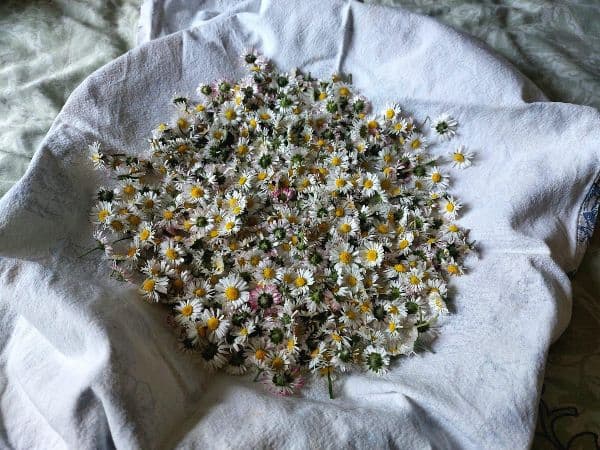
Spring means it’s time to start making daisy oil for the Dublin Herb Bike apothecary. Although you can find daisies underfoot in Ireland pretty much all year long (I’ve picked some in Phoenix Park in December), spring is when they burst into abundance. You will find masses of them growing across lawns and along pathways. They don’t mind being mowed or trampled, similar to our good friend Plantain.
The ‘Common European Daisy’ or ‘Lawn Daisy’ (botanical name: Bellis perennis ) grows all across Ireland. And while it’s not native to the States, but it has been introduced in some areas around the northern US and out west. Here is a link that shows USA distribution: https://plants.usda.gov/plant-profile/BEPE2
Daisy is a great alternative to Arnica that we can use in trauma blends. It is important that we find alternatives to Arnica due to many reasons: over-harvesting in the wild, lack of cultivation, climate change, and the ever expanding footprint of man.
And one thing that makes Daisy even more badass for use in traumatic situations, is that not only is it wonderful for bumps and bruises, but you can also use it on broken skin, something that is contraindicated when working with Arnica.
While in this newsletter, we are focusing on Daisy for topical applications, daisy is also an edible – sprinkle flowers into a salad or cook the leaves as a pot herb. Again, we might contrast this to Arnica which is considered a low-dose botanical and only taken internally with care!
But back to our friend Daisy, who is abundant, versatile, and safe and absolutely adorable…what’s not to love! ????
Making Daisy Oil: Step by Step
Go frolicking in the meadow, gather a basketful of daisies and then just let the flowers air dry for a day to evaporate some of the excess water before infusing in the oil.
Fill your jar with daisies, covering them in extra virgin, cold pressed olive oil. Fill the jar all the way to the tippy top, poking out any bubbles with a chopstick. Make sure the flowers are completely submerged under the oil. Put the lid on and set the jar on a plate, to catch any drooling drips. You will let it steep for a month. No need to shake.
After steeping for a month or so, hand press through a piece of muslin or simply pour it through a fine meshed strainer. Compost the daisies and bottle your gorgeous oil. Don’t forget to label it with all your important bits of information. Store your oil in a cool, dark location.
Making Pain Re-Leaf Salve
Daisy is one of the stars in our Pain Re-Leaf Salve. Here is our recipe card for a couple of our regional variations. You will notice that while we used Arnica oil in our Atlanta blend (often sourced from the Rocky Mountains using Arnica cordifolia), we are able to use Daisy in our Dublin version.
This salve is one of our most popular items at the clinic. It helps with all sorts of aches and pains and smells great. We have made many variations over the years, and you will too, as you play with what ingredients are local to you and easier to source.
Typically we set up our fresh oils individually, as different herbs are in season at different times (Daisy in the spring and St. John’s Wort in the summer for example) and then we blend them together to create our recipes as needed. Dry oil blends can be set up at any time.
TO MAKE – Basic instructions
You can find detailed salve making worksheets in the Toolkit.
Blend oils (see our Pain Re-Leaf recipes below)
Melt in Beeswax at a 1:5 ratio (for example, one ounce of beeswax to every 5 fluid oz of oil blend)
Add the essential oils (optional)
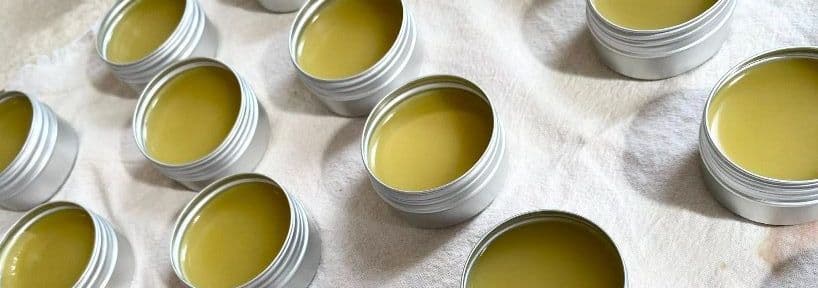
Pour into salve pots, allow to harden and then pop on the lid.
Label!
Usage: Apply liberally to ease the pain of sprains, strains, bruises, and arthritic conditions.
Contraindiations & Safety: If your blend contains Arnica, do not apply to broken skin. Keep away from eyes. And please, use common sense.
Pain Re-Leaf Blend (Dublin Formula)
1 part Calendula Oil
1 part Daisy Oil
1 part St. John’s Wort Oil
Optional: 1 part of Ginger and/or Cayenne Oil for warming version
Wintergreen Essential Oil at a 2% dilution
Pain Re-Leaf Blend (Original ATL Formula)
1 part Dry Herb Base Oil Blend. We make this blend in advance using the following formula. Since many of the herbs in this formula are quite resinous, we first moisten the powdered herbs with a bit of ethanol and leave to pre-macerate in a sealed container overnight before adding in the oil to steep.
1 part Calendula Flowers ½ part Ginger Powder ½ part. Myrrh Powder ½ part. Cayenne Powder ½ part Frankincense Powder ½ part Sweetgum Balls
Fresh Oils – ½ part each of Arnica (or Daisy) and St. John’s Wort
You can find this recipe and ALL THE RECIPES we use at the Herbalista Free Clinic in our member Toolkit. Available to our sustaining members, we hope the Herbalista Toolkit supports you on your herbal journey, just as your support helps us continue ours. ????
Herbalista doesn’t recognize a line between herbal medicine and politics. When practicing as a community herbalist, we see first hand that political decisions have real world consequences and can have dramatic impacts our health.
If we truly believe in preventative and holistic healthcare, we must not only face these issues, but put on our critical thinking hats and get involved.
The roots of ill health have been repeatedly linked to the challenges we face in our daily lives. I’ve always appreciated these words by Dr. Sandeep Jauhar, written in a NYT’s article entitled When Blood Pressure is Political.
“The body doesn’t so much defend a particular set point as allow it to fluctuate in response to changing demands, including those of one’s social circumstances…Today it is clear that chronic diseases such as hypertension, diabetes and heart-failure are inextricably linked to the state of our neighborhoods, jobs and families. We must use this information in the fight against rising income inequality, high imprisonment rates and other social problems.”
In order to promote vitality and wellness within our communities, we must become active participants in untangling the social barriers that stand in the way of respectful and loving interactions. We must honestly assess the economic, environmental, domestic and foreign policies that are polluting the earth while creating unbreakable cycles of poverty and oppression. We must stand together as community herbalists for a more vibrant and equitable world.
From time to time I receive responses to my newsletter that tells me either I have no business bringing politics into the world of herbal medicine or simply throws venomous insults my way, which I assume to mean they disagree with me. In case there has been any confusion about my understanding of what it means to be a community herbalist, to be an HERBALISTA, I would like to state clearly my definition
herbalistanoun
US /ˈhɜː.bəl.ˈiːs.tə/ Ireland /ˈɜː.bəl.ˈiːs.tə/
a person who practices the healing uses of herbs within their community; AND addresses the root causes of illness and imbalance (including societal and political factors); AND freely shares their knowledge with others; AND works to keep herbal medicine accessible to all.
Now, if this perspective isn’t for you, you are under no obligation to work with us, to study with us, or to read our newsletter. The choice is yours. Because in addition to believing in freedom of access, I also believe in the freedom of chioce